
Yamaha WaveRunner vs. Sea-Doo in Orlando
Posted at Mon, Jul 27, 2026 4:37 PM
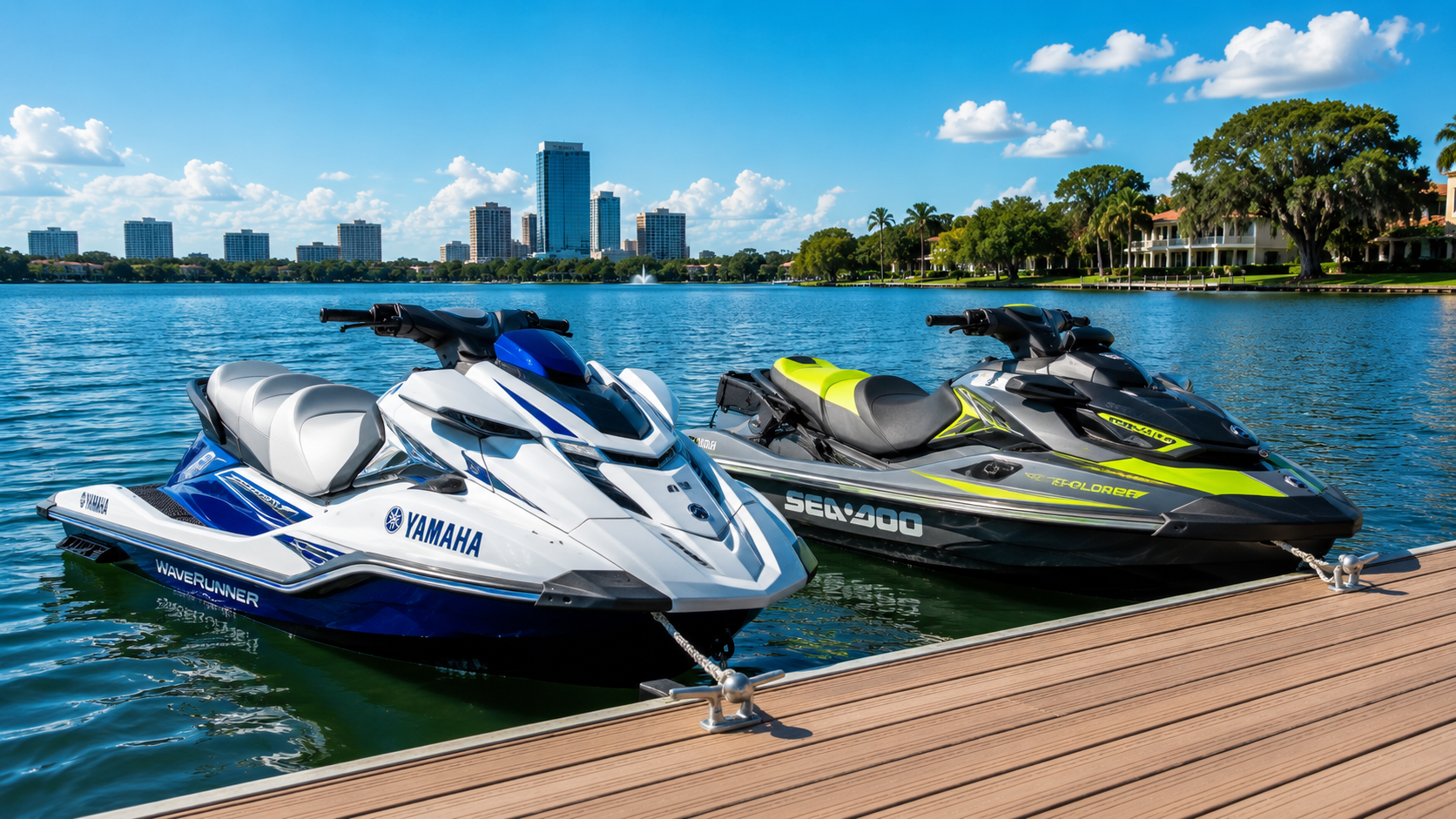
Choosing between a Yamaha WaveRunner and a Sea-Doo for Central Florida's premier waterways requires a look into distinct engineering, hull design, and propulsion technology. At RC Hill Powersports Orlando, we feature an exceptional lineup of new and pre-owned Yamaha personal watercraft, giving local riders the perfect vehicle to tackle smooth inland lake chains or rough coastal runs. Our factory-certified marine technicians handle exhaustive multi-point safety checks, ensuring your hull and powertrain are pristine before launching. For real-time inventory updates or to book a pre-ride evaluation, call our team at (407) 273-3579.
Climate Wear and PWC Material Longevity
Operating a personal watercraft across Central Florida's freshwater lakes and coastal brackish zones highlights clear differences in how distinct manufacturing layouts react to intense local stressors. When stacking a Yamaha Cruiser configuration against a Sea-Doo, environmental wear patterns emerge based on hull composition, cooling architecture, and thermal output.
Climate Wear Comparison Matrix
| PWC System / Component | Yamaha Cruiser Series Climate Impact | Sea-Doo Series Climate Impact | Preventive Maintenance Action |
| Hull & Structural Integrity | Tiered luxury theater seating layout; lighter footprint means operator caution on unpaved sand launches | Polytec composite or traditional fiberglass hulls; prone to UV-induced chalking and color fading | Apply marine-grade polymer sealants; employ protective docking fenders |
| Cooling Loop Management | Open-loop architecture; requires regular flushing to prevent inland mineral or scale buildup | Closed-loop cooling system (CLCS); isolates internal engine block from raw elements | Flush open jet-pump channels post-ride; check internal coolant expansion tanks |
| Thermal & Induction Load | Naturally aspirated powerplants run inherently cooler under extended high-load cruising | High-output forced induction layouts generate high under-hood operating temperatures | Inspect supercharger clutch slip tolerances; monitor engine temperature sensors |
Engineering Breakdown of Florida Climate Wear
The luxury tiering and specialized ergonomics of the Yamaha Cruiser series provide unmatched comfort on all-day excursions, but the lighter hull footprint means operators should take extra precaution at unpaved, sandy public boat ramps where abrasive scraping can scratch deep into the bottom gelcoat. Because Yamaha relies on an open-loop cooling circuit that pumps raw water directly through the engine block to cool the motor, spending hours on brackish waters like the St. Johns River makes an immediate freshwater flush mandatory to prevent internal scale or mineral crystallization.
Conversely, Sea-Doo watercraft employ a closed-loop cooling system (CLCS) that uses a built-in heat exchanger to isolate the internal engine blocks from outside water contaminants. While this shields internal jackets from immediate corrosion, it places a heavy emphasis on checking internal coolant levels and monitoring the external ride-plate heat exchanger for physical damage or mud blockages. Furthermore, models featuring Polytec composite hull designs require consistent UV sealant applications to block the cracking and fading common during 90°F+ (32°C+) Florida summers.
Diagnostic Baseline Tracking and High-Hour Thresholds
Establishing a clear high-hour threshold for any personal watercraft requires analyzing electronic telemetry alongside physical compression metrics. Our factory-trained marine technicians leverage specialized diagnostic hardware to assess engine health, monitor electrical draw, and evaluate supercharger clutch wear ring clearance.
For a standard, naturally aspirated Yamaha Cruiser model, reaching 300 engine hours generally represents a high-hour milestone. Because they face increased stress from forced induction, supercharged Sea-Doo watercraft require precise, scheduled supercharger inspections and clutch assembly refreshes every 100 to 150 hours to maintain peak mechanical reliability.
Our pre-season diagnostic protocol targets:
-
Cylinder Compression: Verifying that internal combustion chambers meet strict manufacturer PSI parameters across all cylinders.
-
Jet Pump and Wear Ring Clearance: Inspecting the impeller blades for mechanical nicks and measuring tolerances between the blade edges and the sacrificial wear ring.
-
Supercharger Clutch Slip: Quantifying the exact slip-moment on forced-induction models to prevent accidental gear or engine failure.
How Well Do Financed Marine Assets Hold Their Resale Value?
Personal watercraft engineered by industry leaders like Yamaha retain exceptional resale value due to their engineering reliability and high demand in the pre-owned Florida market. Maintaining a documented history of factory maintenance checks is your most effective tool for protecting your equity and maximizing trade-in value down the road.
Estimated Value Retention & Lifespan Scale
| PWC Configuration | Average Operational Lifespan (Hours) | 3-Year Value Retention (%) | 5-Year Value Retention (%) | Primary Source of Market Depreciation |
| Yamaha WaveRunner (Naturally Aspirated) | 400 - 600 Hours | 80% | 65% | Severe hull gouging, inadequate storage prep |
| Sea-Doo Watercraft (Naturally Aspirated) | 350 - 500 Hours | 75% | 58% | Impeller/pump damage, electrical neglect |
| Sea-Doo Watercraft (Supercharged) | 250 - 400 Hours | 70% | 50% | Supercharger wear, sustained high-RPM abuse |
Regional Logistics and Pickup Infrastructure
RC Hill Powersports Orlando proudly coordinates watercraft transport, trailer safety checks, and direct vehicle pickup choices within a 15-mile primary radius of our showroom, extending support out to coastal launch sites. Regional watercraft preferences correlate tightly with local suburb geography and close access to local launch ramps:
-
Luxury Touring Transport: Pickup and transport for premium, high-horsepower touring craft featuring premium theater seating options (such as the Yamaha FX Cruiser) favored by enthusiasts in Windermere & Lake Butler.
-
Tow-Sports & Rec-Lite Hauling: Swift transit lines for agile, sport-focused watercraft utilizing the St. Johns River channels near Sanford & Monroe.
-
Utility & Fishing Craft Delivery: Secure transport infrastructure for utility-oriented watercraft optimized for freshwater fishing around Kissimmee & Lake Tohopekaliga.
Technical Troubleshooting and Inquiries
-
Q: Why is my WaveRunner or Sea-Doo losing top-end speed and cavitating?
-
A: A damaged impeller or a worn wear ring is typically the primary cause. Debris sucked up from shallow water can nick the impeller blades or increase the clearance between the impeller and the wear ring, reducing thrust.
-
-
Q: How often should I change the engine oil on my four-stroke PWC?
-
A: Every 50 hours of operation or once a year is the recommended interval for vehicles operating in hot Florida environments. Frequent oil changes prevent moisture buildup in the crankcase from degrading engine bearings.
-
-
Q: What causes my jet ski engine to beep and enter "Limp Mode"?
-
A: Engine overheating or low oil pressure is the primary trigger. Technicians connect diagnostic tools to read the active fault codes and inspect the cooling lines for blockages.
-
-
Q: Can I trade in my off-road vehicle for a new personal watercraft?
-
Q: Why is my watercraft battery dead after sitting for only a few weeks?
-
A: Parasitic draw from the security system or a failing battery cell is usually responsible. We recommend using a marine-grade battery tender when the watercraft is not in use.
-
Route Mapping and Showroom Access
Our flagship showroom is located at 9334 East Colonial Drive, Orlando, FL 32817, right off the Central Florida GreeneWay (SR 417) — East Colonial:
-
From the North (Sanford/Lake Mary): Take the Central Florida GreeneWay (SR 417) South, exit onto East Colonial Drive East, and proceed less than half a mile. Our showroom will be on your right.
-
From Downtown Orlando: Travel East on SR 50 (East Colonial Drive) past Dean Road, approximately 12 to 15 minutes east of Downtown. We are located on the right, just before SR 417.
-
From the South (Kissimmee): Take SR 417 North, take the exit for East Colonial Drive East, and turn into our entrance on the right.
Verified RC Hill Powersports Orlando Hours and Address
Connect with our sales specialists or schedule your next high-hour diagnostic review by visiting our facility.
-
Phone Number: (407) 273-3579
Operating Hours
| Day | Showroom Hours | Service & Parts Hours |
| Monday | Closed | Closed |
| Tuesday | 9:00 AM - 6:00 PM | 9:00 AM - 6:00 PM |
| Wednesday | 9:00 AM - 6:00 PM | 9:00 AM - 6:00 PM |
| Thursday | 9:00 AM - 6:00 PM | 9:00 AM - 6:00 PM |
| Friday | 9:00 AM - 6:00 PM | 9:00 AM - 6:00 PM |
| Saturday | 9:00 AM - 6:00 PM | 9:00 AM - 6:00 PM |
| Sunday | Closed | Closed |
The Bottom Line: Why Factory Care Matters
From an engineering standpoint, choosing between a Yamaha WaveRunner and a Sea-Doo comes down to your specific operational envelope. Yamaha's luxury tiered Cruiser layouts offer unmatched long-distance comfort and touring efficiency, whereas Sea-Doo watercraft provide excellent closed-loop cooling configurations and varied riding dynamics. At RC Hill Powersports, we ensure every watercraft undergoes a rigorous multi-point inspection so that our riders experience maximum reliability on Florida's demanding waterways.