
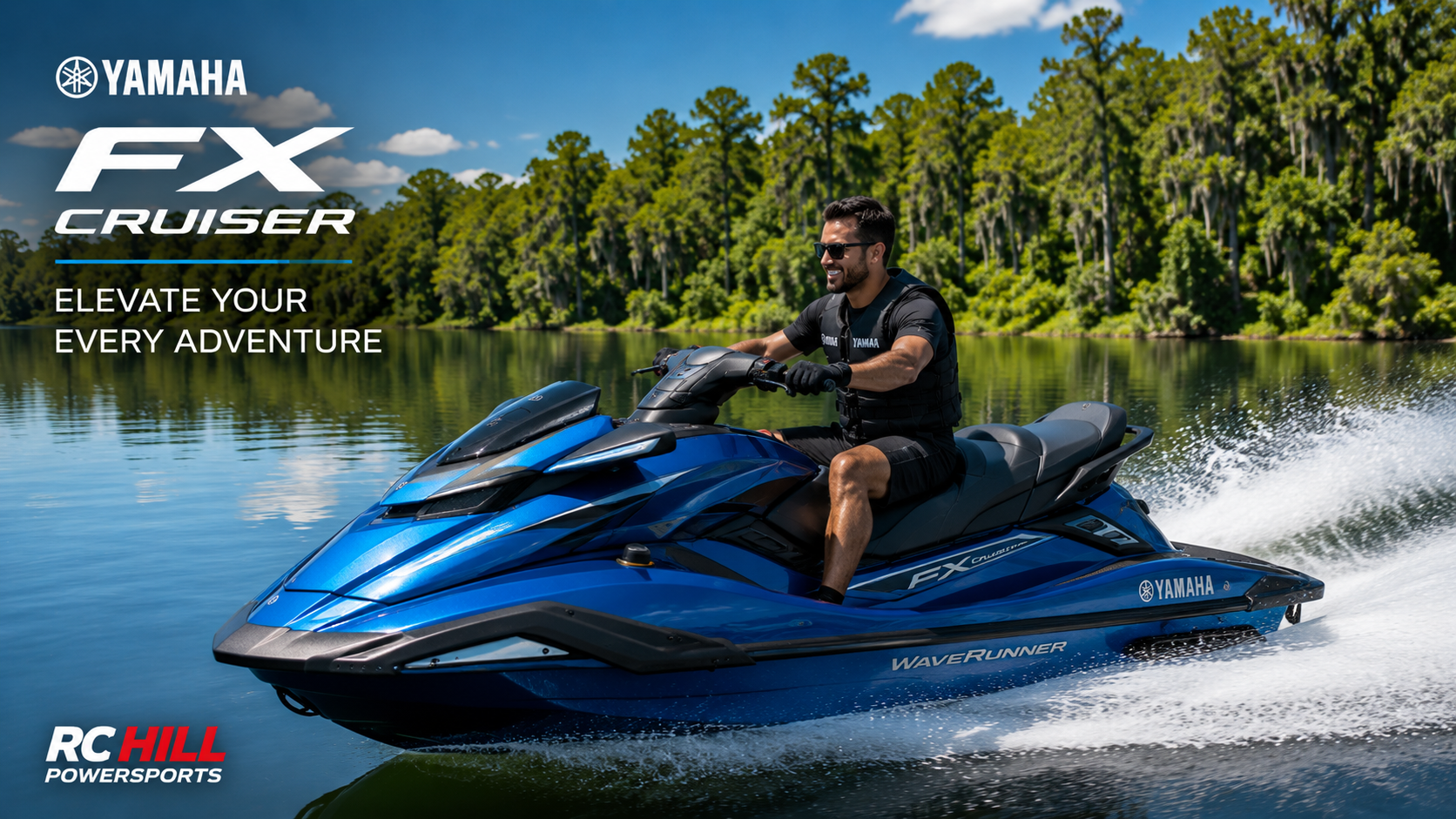
Best Yamaha WaveRunner Models for Orlando Lakes
Posted at Sun, Jul 26, 2026 11:10 AM
Finding the ultimate personal watercraft (PWC) to conquer Central Florida's premier lake chains requires matching specialized hull and engine designs to local water conditions. At RC Hill Powersports Orlando, we feature an exceptional lineup of new and pre-owned Yamaha WaveRunners customized for family cruising, high-speed runs, or freshwater utility. Our factory-certified marine technicians handle exhaustive multi-point safety inspections, ensuring your watercraft's internal cooling loop and electronic systems are calibrated perfectly before launching. For real-time inventory updates or to schedule a diagnostic checkup, call our team today at (407) 273-3579.
Orlando Lake Conditions & Climate Wear Analysis
Selecting a watercraft model requires assessing the specific environmental challenges found throughout Central Florida's freshwater systems and coastal waterways. Intense water temperatures, persistent seasonal humidity, and heavy UV exposure directly dictate the longevity of critical marine components.
Climate Wear Prevention Matrix
| PWC Component | Environmental Threat | Preventive Maintenance Action | Recommended Interval |
| Cooling Passages | Mineral buildup, scale, & internal corrosion | Flush engine block with fresh water and salt-dissolving agent | After every single ride |
| Sacrificial Anodes | Galvanic corrosion in brackish water zones | Inspect anode wear patterns; replace when 50% consumed | Every 6 months |
| Hull & Gelcoat | UV oxidation, chalking, and paint fading | Apply marine-grade wax or premium polymer sealant | Every 3 months |
Engineering Breakdown of Florida Climate Wear
Even when operating your WaveRunner exclusively on inland lakes, traversing interconnected river ways or brackish basins can introduce mineral concentrations that accelerate corrosion. Stagnant moisture inside open-loop engine cooling passages reacts aggressively when paired with water temperatures that run concurrently with 90°F+ (32°C+) Florida summers. Over time, salt and hard water minerals form insulating scale layers that cause local hot spots, degrading critical engine block gaskets.
Furthermore, Orlando's intense UV index breaks down traditional fiberglass gelcoats, causing unsightly fading and chalking. It also dries out critical elastomeric components, including rubber hull seals, steering cable boots, seat vinyl, and traction mats. This material degradation creates micro-cracks that allow water to slowly seep into sealed mechanical boxes, resulting in electrical shorts. Our multi-point safety check targets these exact failure points to eliminate on-water stalls before you ever leave the trailer ramp.
Diagnostic Limits and High-Mileage Capacity
Before dropping your WaveRunner into the Butler Chain or Lake Toho for a weekend run, validating its mechanical and electronic health is essential to avoid getting stranded. Our factory-trained marine mechanics utilize specialized OEM diagnostic equipment to read historical fault code registries, verify engine cylinder compression, and measure supercharger clutch tolerances.
For marine watercraft, total engine operating hours serve as the primary wear metric rather than mileage. While a PWC tracking over 150 to 200 engine hours is generally entering its high-hour lifespan tier, modern four-stroke powerplants (such as Yamaha's naturally aspirated TR-1 or high-output SVHO) can easily exceed 500 hours when backed by meticulous maintenance and seasonal flushes.
Our pre-season diagnostic protocol includes:
-
Jet Pump and Impeller Inspection: Examining the impeller blades for nicks and verifying precise wear ring clearance to avoid performance-robbing cavitation.
-
Supercharger Clutch Test: Quantifying the exact slip-moment on supercharged SVHO models to protect against sudden forced-induction failures.
-
Fuel System and Spark Analysis: Testing fuel lines, evaluating fuel rail pressure, and installing fresh spark plugs to ensure reliable, clean starting.
How Well Do Yamaha WaveRunners Hold Their Resale Value?
Personal watercraft engineered by industry leaders like Yamaha retain exceptional resale value due to their engineering reliability and high demand in the pre-owned Florida market. Keeping a documented history of factory maintenance checks is your most effective tool for minimizing market depreciation.
Estimated Value Retention & Lifespan Scale
| PWC Class | Average Lifespan (Hours) | 3-Year Value Retention (%) | 5-Year Value Retention (%) | Primary Depreciation Driver |
| Yamaha WaveRunner (Naturally Aspirated) | 400 - 600 Hours | 80% | 65% | Severe hull gouges, lack of winterization |
| Yamaha WaveRunner (Supercharged) | 300 - 450 Hours | 72% | 55% | Supercharger wear, jet pump damage |
| Rec-Lite PWC Models | 250 - 400 Hours | 70% | 50% | Engine wear, aggressive hull handling |
Logistics Radius: Suburb Demand Analysis
RC Hill Powersports Orlando proudly coordinates watercraft transport, trailer safety checks, and direct vehicle pickup services within a 15-mile primary radius of our showroom. Demand for specific Yamaha configurations correlates tightly with local suburb geography and close access to local launch ramps:
-
Luxury Touring Layouts: Heavy regional demand for high-horsepower touring craft featuring premium theater seating options (such as the Yamaha FX Cruiser) optimized for long-distance lake cruising across Windermere & Lake Butler.
-
Agile Rec-Lite Platforms: Strong preference for nimble, highly maneuverable entry models (like the Yamaha EX series) built for navigating the flowing currents of the St. Johns River near Sanford & Monroe.
-
Utility & Angling Configurations: Increased interest in robust, utility-focused setups customized with stable rear platforms for freshwater fishing throughout Kissimmee & Lake Tohopekaliga.
Technical Troubleshooting and Inquiries
-
Q: Why is my jet ski losing top-end speed and cavitating under acceleration?
-
A: A damaged impeller or a worn wear ring is typically the cause. Debris sucked up from shallow water can nick the impeller blades or increase the clearance between the impeller and the wear ring, reducing thrust.
-
-
Q: How often should I change the engine oil on my four-stroke PWC?
-
A: Every 50 hours or once a year (at the end of the season) is the recommended interval. Regular oil changes prevent moisture buildup in the crankcase from degrading engine bearings.
-
-
Q: What causes my jet ski engine to beep and enter "Limp Mode"?
-
A: Engine overheating or low oil pressure is the primary trigger. Technicians connect diagnostic tools to read the active fault codes and inspect the cooling lines for blockages.
-
-
Q: Can I trade in my off-road vehicle for a new personal watercraft?
-
A: Yes, RC Hill Powersports accepts trade-ins across all powersports classes, allowing you to trade your ATV or SxS for a new Yamaha WaveRunner.
-
-
Q: Why is my watercraft battery dead after sitting for only a few weeks?
-
A: Parasitic draw from the security system or a failing battery cell is usually responsible. We recommend using a marine-grade battery tender when the watercraft is not in use.
-
Route Mapping and Showroom Access
Our premier showroom is centrally positioned in East Orlando, offering simple highway connections from major regional expressways like SR-408, SR-417, and I-4. Drop by before your next weekend excursion to stock up on genuine parts, high-visibility life jackets, or to check out the best launch spots in the area:
-
Lake Monroe Park Launch (Sanford): Provides excellent access to the St. Johns River.
-
R.D. Keene Park Boat Ramp (Windermere): The premier launch ramp for accessing the pristine Butler Chain of Lakes.
-
Lake Tohopekaliga Marina (Kissimmee): Perfect for expansive riding and freshwater fishing excursions.
Verified RC Hill Powersports Orlando Hours and Address
Visit our dealership to browse our extensive inventory of new and pre-owned Yamaha WaveRunners, pick up factory maintenance fluids, or drop off your craft for an expert checkup.
-
Phone Number: (407) 273-3579
Operating Hours
| Day | Showroom Hours | Service & Parts Hours |
| Monday | Closed | Closed |
| Tuesday | 9:00 AM - 6:00 PM | 9:00 AM - 6:00 PM |
| Wednesday | 9:00 AM - 6:00 PM | 9:00 AM - 6:00 PM |
| Thursday | 9:00 AM - 6:00 PM | 9:00 AM - 6:00 PM |
| Friday | 9:00 AM - 6:00 PM | 9:00 AM - 6:00 PM |
| Saturday | 9:00 AM - 5:00 PM | 9:00 AM - 4:00 PM |
| Sunday | Closed | Closed |
The Bottom Line: Why Factory Care Matters
Preparing a personal watercraft for the intense Florida summer requires a systematic approach to mechanical and cooling systems. Unlike land vehicles, a PWC relies on the water it rides in for engine cooling, making open-loop cooling systems highly vulnerable to mineral and salt deposits. At RC Hill Powersports Orlando, we focus our pre-season inspections on clearing cooling blockages, testing pump wear ring tolerances, and verifying battery load capacity so our riders can hit the water with absolute confidence.